

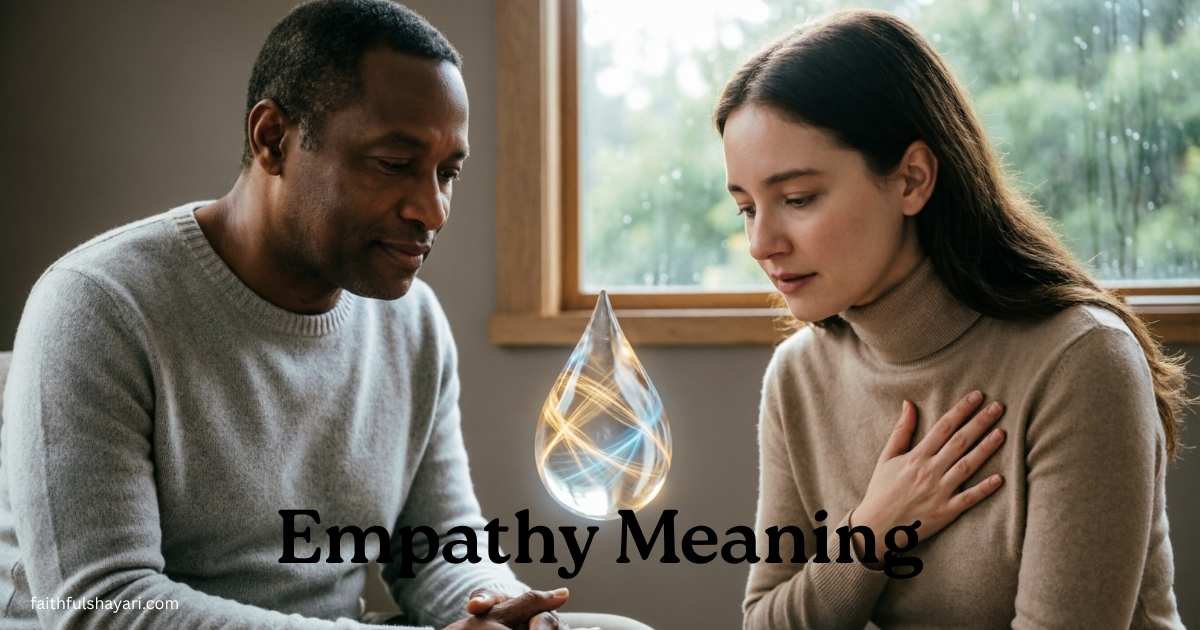
Sometimes, people seem cold even during painful moments. That confusion makes relationships stressful and emotionally exhausting for many people today. Understanding Empathy Meaning can help you recognize emotions, improve communication, and connect better with others naturally. Many people search for Empathy Meaning because they want stronger friendships, healthier relationships, and fewer misunderstandings in daily life.
This guide explains Empathy Meaning using simple language, relatable examples, and practical everyday situations you can easily understand today. You’ll also learn different empathy types, emotional behaviors, and why empathy matters deeply in personal relationships and communication. The article covers signs of empathetic people, empathy development, and ways to practice empathy without emotional burnout or confusion. By the end, Empathy Meaning will feel clearer, more useful, and easier to apply in real conversations and situations.
What Is Empathy?
Empathy means understanding another person’s feelings while imagining life from their emotional point of view. It helps you respond with care instead of judgment during difficult conversations or painful situations. Emotional understanding strengthens friendships, improves communication, and builds trust between people. Many psychologists connect empathy with emotional intelligence, active listening, and healthier interpersonal connections in everyday social life for everyone.
Empathy does not mean agreeing with every opinion or carrying another person’s emotional pain constantly. Instead, it means recognizing feelings honestly and showing compassion through supportive words or thoughtful actions. Cognitive empathy helps people understand reactions while affective empathy helps them emotionally connect with others. These abilities encourage prosocial behavior, reduce conflict, and create relationships at home, school, and work.
Origin and history of empathy

The origin and history of empathy trace how humans came to understand the feelings of others through emotional and cognitive awareness. The idea of empathy meaning developed across philosophy, psychology, and neuroscience over time. Early thinkers studied emotional understanding as part of moral life and social behavior.
The interpretation may vary depending on the situation.
- The word “empathy” comes from the German term Einfühlung, meaning “feeling into.” Psychologist Edward Titchener later introduced it into English psychology in the early 1900s.
- Philosophers like David Hume and Adam Smith explored early ideas of sympathy and moral sentiment, linking human emotion with ethical behavior and social bonding.
- Thinkers such as Theodor Lipps and Rudolf Lotze shaped early theories of inner imitation, where people mentally mirror others’ experiences to understand them better.
- Modern psychology connects empathy with social cognition, theory of mind, and brain systems like mirror neurons, amygdala, and the medial prefrontal cortex.
- Positive views highlight empathy as a foundation of compassion, altruism, and prosocial behavior, while negative perspectives warn about emotional overload, bias, or empathy fatigue in intense caregiving roles.
The Main Types of Empathy
Have you ever felt someone’s emotions without them saying anything? That quiet connection shows how powerful human understanding can be. When you explore empathy meaning more deeply, you realize it is not just one skill. It appears in different forms that shape how you understand, feel, and respond to others in daily life.
Empathy works like different levels of emotional awareness. Sometimes you only understand a situation. Other times, you feel it deeply. Think of it like adjusting a camera lens. Each focus gives you a new view of human emotions and relationships.
- Cognitive empathy is understanding another person’s thoughts without sharing their feelings. A manager may use it to see why an employee is struggling without emotional involvement. It connects with perspective taking, theory of mind, and social cognition, helping you make fair and logical decisions.
- Affective empathy is the emotional side. You actually feel what someone else feels, such as sadness or joy. It links with emotional contagion, where emotions spread naturally between people. It builds strong bonds but can also lead to emotional fatigue if not balanced with regulation.
- Compassionate empathy goes beyond feeling and understanding. It pushes you to take action and help. For example, supporting someone in distress instead of just noticing their pain. It connects with empathic concern and prosocial behavior, encouraging real kindness.
Each type of empathy plays a key role in relationships. Cognitive empathy helps you understand, affective empathy helps you feel, and compassionate empathy helps you act. When balanced, they improve emotional intelligence and strengthen human connection in everyday life.
Empathy vs. Sympathy vs. Compassion
Understanding empathy, sympathy, and compassion helps you see how people emotionally respond to others in different ways. These three terms are often confused, but each has a unique role in emotional understanding and human connection. When exploring empathy meaning, it becomes easier to separate feeling, understanding, and action in real-life situations.
In simple terms, these concepts shape how we react when someone is going through pain, joy, or struggle. They are widely studied in psychology, emotional intelligence, and moral psychology because they influence relationships and behavior. The interpretation may vary depending on the situation.
- Empathy means you understand or feel what another person is experiencing. It can be cognitive (understanding) or affective (feeling). For example, you may feel sadness when a friend is hurt. A positive side is deeper connection, but a negative side is emotional exhaustion or empathy fatigue if overused.
- Sympathy is when you feel concern for someone without fully sharing their emotions. You recognize their pain from a distance, like saying “I feel sorry for you.” It is emotionally safer but can sometimes feel less connected or less personal compared to empathy.
- Compassion goes one step further than sympathy. It includes emotional concern plus a strong desire to help. For instance, supporting someone in crisis instead of just acknowledging their pain. It is linked with prosocial behavior and altruism, but in high-stress roles, it may also lead to compassion fatigue.
- From a psychological view, empathy, sympathy, and compassion often overlap but activate different emotional systems. Empathy involves emotional and cognitive sharing, sympathy involves emotional acknowledgment, and compassion leads to action-oriented support. Together, they shape how humans build trust, care, and meaningful relationships in everyday life.
Why is empathy so important?
Empathy is important because it helps people understand each other on a deeper emotional level. When you apply empathy meaning in daily life, you start seeing situations from another person’s point of view. This reduces misunderstandings and builds stronger emotional intelligence. It also improves communication and helps you respond with care instead of judgment in relationships, work, and social situations.
Empathy also plays a key role in building trust and healthy connections. It encourages compassion, active listening, and emotional understanding between people. When empathy is present, conflicts are easier to solve and relationships feel more supportive. However, too little empathy can lead to emotional distance, while too much without balance may cause emotional fatigue or stress in sensitive individuals.
Signs You’re an Empathetic Person
If you understand people easily, you may already know empathy meaning in action without realizing it. Empathy shows through daily behaviors, emotions, and how you respond to others.
- You notice other people’s feelings quickly
- You listen without interrupting or judging
- You feel emotional when others are hurt
- You often understand unspoken emotions
- You care deeply about people’s problems
- You try to support others in need
- You think from others’ perspectives
Empathetic people often build strong emotional connections naturally. They make others feel safe and understood in conversations and relationships.
- You are sensitive to emotional changes
- You avoid hurting others intentionally
- You offer comfort when someone is sad
- You enjoy helping and supporting people
- You read body language easily
- You feel drained after emotional situations
- You value deep and honest connections
What Causes Empathy?
Empathy develops through a mix of brain activity, learning, and life experiences. When you understand empathy meaning, you see it is not just emotion but also a skill shaped by nature and environment. The brain uses areas linked to emotional understanding, such as mirror neurons and the amygdala, to help people recognize and respond to others’ feelings.
Early relationships and social experiences also shape empathy. Children learn it by watching parents, teachers, and peers. Positive care, emotional support, and communication strengthen it over time. However, stress, trauma, or lack of connection can reduce empathy. Personality traits and emotional intelligence also influence how strongly a person naturally feels and responds to others in daily life situations.
Factors That Can Influence Empathy
Empathy can change based on many internal and external factors that shape how a person understands and responds to others. When exploring empathy meaning, it becomes clear that emotional intelligence, personality, and environment all play a role in how strongly empathy develops. These factors can either strengthen or weaken emotional understanding in daily life.
In psychology and moral psychology, empathy is not fixed. It shifts with experience, stress levels, and social exposure. The interpretation may vary depending on the situation.
- Brain and biology: Structures like the amygdala, mirror neurons, and medial prefrontal cortex influence emotional recognition and perspective taking. Strong neural responses often support better emotional understanding, while irregular activity may reduce emotional sensitivity.
- Personality traits: Traits from the Big Five model, such as agreeableness and openness, can increase empathy. On the negative side, traits linked with the dark triad, like narcissism or Machiavellianism, may reduce empathic concern and emotional connection.
- Life experiences: Positive upbringing, supportive relationships, and exposure to diverse people can strengthen empathy. In contrast, trauma, neglect, or emotional burnout may lead to empathy fatigue or emotional detachment over time.
- Mental health conditions: Conditions like autism spectrum disorder, borderline personality disorder, or psychopathy can influence how empathy is experienced or expressed, sometimes affecting emotional recognition or response.
- Social environment: Culture, in-group bias, and social conditioning also shape empathy. Supportive environments encourage compassion and prosocial behavior, while conflict-heavy or stressful settings may reduce emotional openness and increase indifference.
Examples of empathy
Empathy shows up in everyday life when you understand and share someone else’s feelings. When you explore empathy meaning in real situations, you see how people connect emotionally through small actions, words, and gestures that show care and understanding.
- You comfort a friend who is feeling sad
- You listen carefully without interrupting someone’s story
- You feel happy when someone achieves success
- You notice when someone is quietly upset
- You offer help to a classmate struggling with work
- You understand a coworker’s stressful situation
- You stay patient with someone having a bad day
- You support a family member during illness
- You respect different opinions even when you disagree
- You avoid judging someone without knowing their story
Empathy builds stronger relationships because it helps people feel seen and understood. It creates emotional trust in both personal and professional life.
- You try to see things from another person’s view
- You forgive small mistakes more easily
- You encourage someone who feels low or anxious
- You share emotional moments with close friends
- You adjust your behavior to avoid hurting others
- You respond kindly even in stressful situations
- You check on someone who seems withdrawn
- You listen with genuine interest and care
- You show patience during emotional conversations
- You offer emotional support without expecting anything back
Tips for practicing empathy

Ever felt like people are speaking, but you’re not really “getting” them? That’s where empathy changes everything. It helps you step into someone else’s emotional world, even for a moment. When you understand empathy meaning in real life, you start noticing small emotional signals you used to miss.
Practicing empathy is not about being perfect. It is about being present, aware, and willing to understand others. Think of it like tuning a radio. When the frequency is right, you clearly hear what the other person is really saying beyond words.
Here are some simple but powerful ways to build empathy in daily life:
- Practice active listening: Focus fully when someone talks. Don’t plan your reply while they are speaking. For example, in a conversation with a friend, notice their tone, pauses, and emotions. This helps you understand feelings, not just words.
- Use perspective taking: Try to imagine life from the other person’s point of view. Ask yourself, “What might they be going through?” This strengthens cognitive empathy and reduces quick judgment.
- Pay attention to body language: Many emotions are unspoken. A tired voice, crossed arms, or silence can reveal more than words. Reading these signals improves emotional understanding and emotional intelligence.
- Slow down your reactions: Instead of reacting immediately, pause for a moment. This small habit helps prevent misunderstandings and supports compassionate responses instead of emotional reactions.
- Expose yourself to different experiences: Meeting people from different backgrounds reduces bias and builds social cognition. It also weakens in-group bias and increases emotional openness.
A lesser-known fact is that empathy can grow stronger when you reflect on your own emotions regularly. Self-awareness helps you connect better with others.
In the end, empathy grows with practice, not perfection. The more you try to understand people, the more naturally it becomes part of who you are.
Spouse Meaning: Definition, Origin, and What It Really Means in a Relationship
FAQs
What does Empathy Meaning actually refer to?
It refers to understanding and sharing another person’s feelings, thoughts, and emotional experiences in a meaningful way.
How is Empathy Meaning different from sympathy?
Empathy involves feeling or understanding emotions deeply, while sympathy only expresses concern without truly sharing emotional experience.
Can Empathy Meaning change over time in people?
Yes, it can grow or reduce depending on experiences, relationships, and emotional awareness developed throughout life stages.
Does Empathy Meaning affect relationships between people?
It strengthens trust, improves communication, and helps people connect emotionally by understanding each other’s feelings better.
Is Empathy Meaning linked to emotional intelligence?
Yes, it is closely connected because it helps people recognize emotions and respond thoughtfully in social situations.
Conclusion
Empathy Meaning helps you understand people in a deeper and kinder way. When you learn Empathy Meaning, you start seeing emotions more clearly. It improves how you listen, respond, and connect with others. Empathy Meaning is not just a concept. It is a skill you can build with practice. Small changes in behavior can make a big difference in relationships.
In the end, Empathy Meaning teaches you to care without judgment. It helps you grow emotional intelligence and better communication. When you apply Empathy Meaning in life, you build trust and stronger bonds. It also reduces conflict and misunderstanding. Keep practicing Empathy Meaning every day. Over time, it becomes a natural part of how you think and interact with people.
