

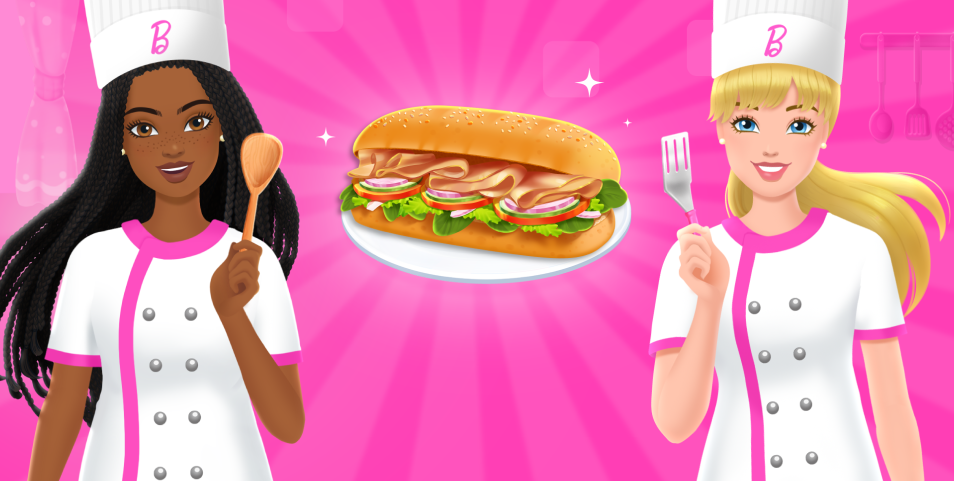
Cooking games can introduce children to ingredients, kitchen tools and meal prep without the heat, sharp utensils, or inevitable mess of a real kitchen. Although an app cannot replace supervised hands-on cooking, it can help unfamiliar foods feel more approachable and turn basic culinary processes into playful activities.
The App Store includes everything from open-ended food experiments to recipe-based challenges and virtual restaurant management. The following games offer particularly useful starting points for families hoping to encourage a stronger interest in cooking.
Toca Boca Jr and Toca Kitchen 2
Toca Boca Jr includes Toca Kitchen 2, an imaginative cooking game that gives children ingredients, appliances and hungry characters rather than strict recipes. Young players can slice carrots, fry fish, juice lettuce or combine foods in deliberately unusual ways before serving the results.
The characters react differently to each creation, helping children observe preferences and experiment with cause and effect. There is no pressure to achieve a perfect score, so the experience encourages curiosity instead of presenting cooking as a task that can be failed. The wider app is aimed primarily at children aged two to eight and includes several other creative activities.
It is an excellent choice for younger children because it asks a simple question: what happens if you prepare this ingredient in that way? That experimental approach can encourage children to become more comfortable discussing food and trying new combinations at home.
Toca Boca Jr Kitchen Netflix
Families with a Netflix membership can also consider Toca Boca Jr Kitchen Netflix. This standalone version offers three guests, a refrigerator of ingredients and five tools, including an oven and juicer.
Children can create conventional dishes or intentionally silly combinations such as spaghetti smoothies, fried watermelon and cooked pineapple. Each guest has individual likes and dislikes, so players gradually learn to read reactions and adapt their creations. The game has no third-party advertising and emphasises child-directed play without restrictive rules.
This is playful gaming, but it also introduces a valuable cooking principle: the same ingredient can be chopped, baked, fried, boiled or blended, with every technique producing a different result.
Dr. Panda Restaurant
Dr. Panda Restaurant uses short mini-games to guide children through ten dishes and drinks, including pizza, apple pie, corn soup, stir-fried food and fruit milkshakes. Players practise virtual slicing, frying, mixing, baking and toasting before presenting meals to animal customers.
The game expands beyond food preparation by asking children to feed guests, clean tables, decorate the restaurant and sort rubbish for recycling. Its interface requires little or no reading, making it accessible to preschool children. The App Store listing also states that the game contains no third-party advertisements or in-app purchases.
Its combination of recipes and restaurant chores can help children understand that cooking involves organisation and cleaning as well as preparing food.
Dr. Panda Restaurant 2
Dr. Panda Restaurant 2 offers a less structured experience than its predecessor. Children can select from more than 20 ingredients and decide whether to chop, grate, blend, bake, boil or fry them.
Customers respond to the flavour and preparation of each dish, giving players immediate feedback without imposing a formal scoring system or time limit. A vegetarian mode is also available, providing an opportunity to explore meals that do not contain meat or fish.
The game works especially well for children who enjoy invention more than following fixed instructions. Parents could extend the experience by asking why a virtual customer liked one meal but rejected another, or by helping the child recreate a safe, simplified version of a successful dish.
Cooking Mama: Let’s Cook!
Cooking Mama: Let’s Cook! provides a more traditional recipe-based experience. More than 30 dishes are divided into touch-controlled mini-games involving chopping, baking and stewing. Mistakes do not produce a game-over screen, allowing children to complete dishes while gradually improving their technique.
The Happy Village mode extends the activity into restaurant management and food production. Players can serve meals, grow plants, raise animals and go fishing for ingredients. The app also includes kitchen decoration, weekly challenges and selected real-life recipe videos.
Cooking Mama is a suitable bridge between unrestricted imaginative play and real recipe sequences. It introduces the idea that a finished meal results from several smaller steps completed in the correct order. Parents should note that the free app contains optional in-app purchases.
Cooking Mama: Cuisine!
Available through Apple Arcade, Cooking Mama: Cuisine! asks children to discover recipes by combining ingredients with appropriate kitchen tools. Successful combinations are recorded in a recipe book, encouraging players to experiment and remember how dishes were created.
Ingredients and cooking equipment change each day, bringing different recipe possibilities throughout the week. Completing dishes awards cooking points that can unlock clothing and accessories for Mama. Apple Arcade describes the title as containing more than 200 activities without advertising or separate in-app purchases.
The discovery system can support basic problem-solving because children must consider which tools are suitable for particular ingredients.
Kids Cooking Games: Pizza Maker
Kids Cooking Games–Pizza Maker, also known through its Cooking Club branding, focuses on colourful, step-by-step food preparation for children up to approximately five years old.
The app contains more than 100 recipe activities covering pizzas, cakes, cupcakes, doughnuts, pancakes, noodles and dumplings. Children can also create food art using fruit, sandwiches and other ingredients. Its activities involve stirring, mixing, decorating and arranging toppings, potentially supporting hand-eye coordination, memory and pattern recognition.
Because the app is free with optional purchases, parents should review its settings and available content before handing over the device.
My Town: Sweet Bakery Empire
My Town: Sweet Bakery Empire combines cooking with digital-dollhouse play. Children can operate a bakery, prepare cakes, decorate birthday treats, make pizzas and deliver completed orders.
The game includes seven locations, including a bakery, pizza shop, apartment and party area. Children can create characters, preserve their progress and use a multi-touch feature to play with a parent, sibling or friend on the same device. It is marketed for ages four to 12, although younger users may benefit from playing alongside an adult.
Turning Screen Play into Real Cooking
The most useful cooking app is one that leads to conversation away from the screen. After a session, parents might invite their child to wash vegetables, spread toppings on a pizza, mix cold ingredients or decorate a cake under close supervision.
Open-ended games are better for creativity, while recipe-based apps are better for sequencing and following instructions. Before downloading, parents should also check age ratings, privacy information, advertising, subscriptions and in-app purchases. Age checks matter for adult apps too. Regulated gaming platforms such as DraftKings Casino are restricted to adults and verify each user’s age and identity before they can play, which is one reason it’s worth keeping children’s apps and adult accounts on separate profiles or devices.
Used thoughtfully, these games can do more than occupy screen time. They can give children the vocabulary and confidence to ask questions about food, recognise basic preparation methods and eventually participate in the real family kitchen.
