

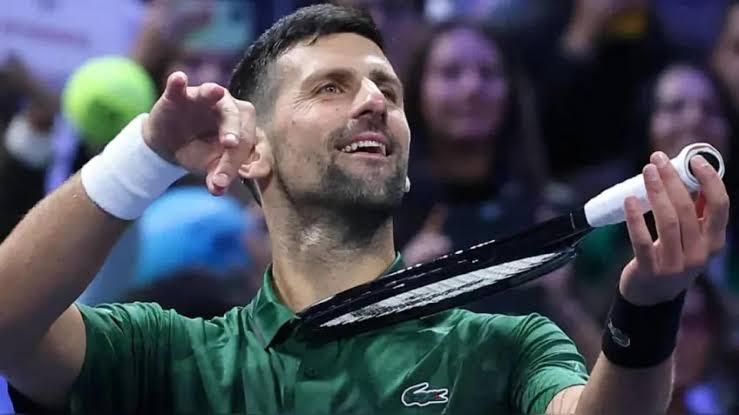
Longevity in tennis is not simply the ability to continue playing. The greater challenge is remaining competitive while physical recovery changes, younger opponents introduce different patterns, and the calendar continues to demand repeated high-intensity matches. Novak Djokovic’s career offers a case study in adaptation. His movement, return of serve, defensive skills, and baseline consistency established his success, but remaining near the top required him to modify how those strengths were used.
The process is based on reducing unnecessary physical cost without removing the qualities that make his tennis effective. Djokovic increasingly has to decide which rallies to extend, when to attack earlier, and how to use his serve to avoid neutral exchanges. Like a player assessing changing situations in an andar bahar online game, he must constantly process the information available, although his outcomes depend on technical execution and tactical choices rather than chance. Aging has made efficiency a larger part of his competitive model.
The Serve Became a Tool for Efficiency
Earlier in Djokovic’s career, his serve was often discussed as a way to begin rallies rather than finish points. His return game and baseline control were so effective that he could tolerate starting many service points from neutral positions.
Over time, that calculation changed.
Improving placement allowed him to create more free points and weaker returns. Instead of relying only on pace, he could vary direction and use the serve to determine the pattern of the next shot.
A serve out wide might open space for the following forehand. A delivery into the body could restrict the returner’s swing. The objective became reducing the amount of physical work required to hold serve.
Across a long match or tournament, those saved exchanges accumulate.
His Return Became More Selective
Djokovic’s return has long been one of the foundations of his game. His balance, timing, and ability to redirect pace allow him to neutralize serves that would produce weak replies from many opponents.
Age has not removed that weapon, but experience has changed how he can use it.
Not every return needs to create immediate pressure. Against a first serve, simply placing the ball deep can force the server to play another shot. Against a second serve, Djokovic can move forward and become more aggressive.
The distinction matters because return position creates different tactical possibilities.
By adjusting where he stands and how much risk he accepts, Djokovic can respond to the server rather than applying one pattern throughout a match.
Baseline Defense Became More Economical
Djokovic built much of his reputation on his ability to defend positions that appeared lost.
He could slide into wide areas, control difficult balls, and recover toward the center before the opponent finished the point. These sequences placed major physical demands on movement and recovery.
As a player ages, repeating such rallies becomes more expensive.
The solution is not to stop defending but to reduce how often extreme defense becomes necessary.
Djokovic can accomplish this by taking the ball earlier, maintaining better court position, and changing direction before an opponent gains full control. Instead of absorbing several attacks, he can attempt to neutralize the rally sooner.
The defensive skill remains, but it becomes a reserve rather than the default plan.
Earlier Ball Striking Changes Rally Geometry
Standing closer to the baseline has another advantage: it takes time away from the opponent.
When Djokovic meets the ball earlier, the next shot returns sooner. His opponent has less time to recover position and prepare.
This can shorten points without requiring a low-percentage winner.
A deep shot followed by an early change of direction may create an open court on the next ball. The point can then be finished through placement rather than additional power.
This represents an important form of adaptation. Efficiency does not necessarily mean becoming more aggressive on every shot. It can mean creating the same advantage with fewer strokes.
The Forehand Carries More Attacking Responsibility
Djokovic’s backhand has traditionally received attention for its stability, return quality, and ability to redirect the ball.
His forehand, however, has become increasingly important for controlling shorter rallies.
When a neutral ball lands short, stepping around the backhand can allow Djokovic to attack with the forehand and dictate the next phase. The inside-out forehand can move an opponent away from the court before the next shot is directed into the available space.
This helps him avoid extended neutral exchanges.
The forehand does not need to produce a winner immediately. Its purpose can be to create a weaker response that makes the next shot easier.
Net Play Provides Another Route to Shorter Points
Approaching the net carries risk, but it can also prevent a rally from extending.
Djokovic has increasingly used forward movement when the previous shot has already placed the opponent under pressure. This is different from attacking the net without preparation.
The approach creates the advantage; the volley completes it.
His ability to read passing-shot options also becomes important. Years of competing against different playing styles provide information about likely responses from particular positions.
Net play therefore supports the broader objective of reducing physical expenditure while maintaining pressure.
Scheduling Became Part of Performance
Longevity is not only a technical problem. It is also a question of workload.
An experienced player has accumulated thousands of competitive sets, training sessions, travel days, and recovery cycles. Playing every available event can create costs that appear later in the season.
Selective scheduling allows more time for recovery and preparation.
For Djokovic, prioritizing tournaments can help ensure that physical and technical preparation is directed toward events that matter most to his goals.
This changes the traditional definition of consistency. The objective is no longer necessarily to compete every week. It is to arrive prepared when the selected competition begins.
Experience Replaces Some Physical Margin
Younger players may recover faster or produce repeated acceleration with lower physical cost. Experience offers a different advantage.
Djokovic has encountered thousands of tactical situations. He has played against servers, counterpunchers, aggressive baseliners, and players who attack the net.
That information helps him recognize patterns earlier.
If he anticipates where a shot is likely to go, he may not need to move as far. If he identifies an opponent’s serving tendency, he can adjust return position before the ball is struck.
Anticipation does not eliminate physical demands, but it can reduce them.
Longevity Is an Exercise in Adaptation
Djokovic’s evolution demonstrates why sporting longevity is not achieved by preserving exactly the same game.
The body changes, opponents change, and the cost of certain patterns changes. The player must respond.
His serve has become more important for creating short points. His baseline positioning can reduce defensive distance. His forehand and net play provide routes to earlier finishes, while scheduling helps manage accumulated workload.
At the same time, the foundations remain recognizable: return quality, balance, tactical discipline, and the ability to change direction from the baseline.
That combination explains the central challenge of longevity. A veteran cannot abandon the qualities that created success, but cannot depend on them in exactly the same way forever. Djokovic’s later career shows how adaptation can preserve identity while changing the methods used to win.
