

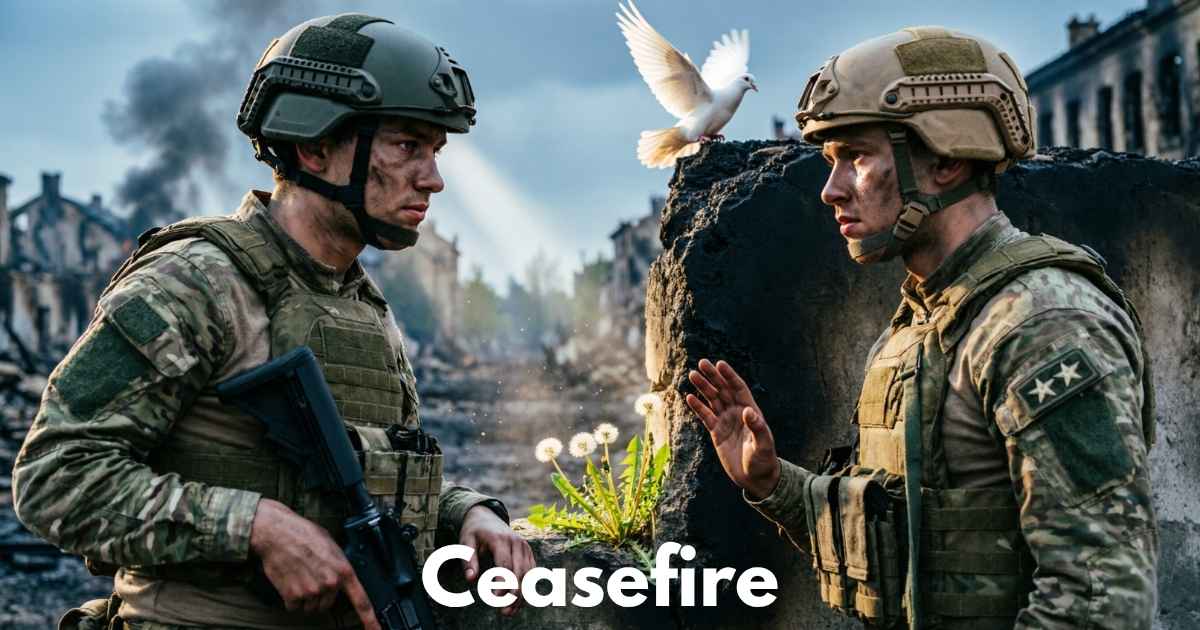
News headlines often mention the ceasefire meaning during conflicts, yet many people still feel confused today. You might wonder whether a ceasefire actually stops violence or simply delays another dangerous military attack. That confusion grows when reporters discuss Gaza, Ukraine, or border tensions without explaining important political terms clearly. Understanding the meaning of the ceasefire helps you follow global events without feeling emotionally detached.
This guide breaks down Ceasefire Meaning using simple language, real examples, and clear historical context. You’ll learn how ceasefires work, why governments negotiate them, and whether they truly end wars permanently. The article also explains different ceasefire types, including temporary humanitarian and unconditional agreements, used during major international conflicts. By the end, Ceasefire Meaning will feel easier to understand
What Is the Meaning of Ceasefire?
The term Ceasefire Meaning refers to an agreement to stop fighting during a war or conflict. Countries, armies, or groups pause military attacks for a specific time or purpose. Sometimes leaders use a ceasefire to protect civilians, deliver aid, or begin peace talks. It does not end the conflict permanently.
Many people ask what a ceasefire means when they hear breaking news about global conflicts today. In simple words, a ceasefire creates temporary calm between opposing sides. However, tensions may continue behind the scenes. Some ceasefires last only days, while others lead to long negotiations and future peace agreements worldwide
Ceasefire Meaning in Simple Words

Ceasefire meaning in simple words, is a temporary stop in fighting between two sides during a conflict or war. It allows peace talks and reduces harm to civilians temporarily in conflicts.
- A pause in fighting
- Not a permanent peace
- Used during wars or conflicts
- Helps protect civilians
- Allows negotiation time
- Can be short or long
- May break if tensions rise
Why Is a Ceasefire Important in War?
A ceasefire is important in war because it stops violence for a while and saves lives. It gives soldiers and civilians a break from danger. During this pause, food, medicine, and aid can reach affected areas more safely and quickly.
It also creates space for dialogue between fighting sides. Leaders can discuss peace instead of continuing attacks. This reduces fear and destruction in war zones. Even a short ceasefire can build trust and open the door for long-term peace talks.
Ceasefire Meaning in Hindi
Meaning of Ceasefire in Hindi is “युद्धविराम”. इसका मतलब होता है लड़ाई को कुछ समय के लिए रोक देना ताकि शांति वार्ता और सहायता कार्य हो सकें।
- युद्ध को रोकने का समझौता
- अस्थायी शांति की स्थिति
- बातचीत के लिए समय देना
- नागरिकों की सुरक्षा करना
- मानवीय सहायता पहुंचाना
- संघर्ष में विराम लेना
- स्थायी शांति नहीं होती
Ceasefire Synonyms
Synonyms of Ceasefire are words used to describe a pause in fighting between groups or countries during conflict, often used in news, politics, and discussions about peace negotiations worldwide today.
- Truce
- Armistice
- Peace pause
- Halt the fighting
- Cessation of hostilities
- Pause in war
- Military break
- Temporary peace
- Standstill in conflict
- Peace agreement pause
Ceasefire Antonyms
Antonyms of Ceasefire are words that describe the opposite of stopping a conflict. They show continued fighting, violence, or escalation during war instead of any pause or peace efforts.
- War
- Conflict
- Fighting
- Battle
- Hostilities
- Aggression
- Escalation
- Attack
- Strife
- Violence
Types of Ceasefires Explained
Not all ceasefires look the same. Some feel like a deep breath during chaos, while others are more like a shaky pause before things start again. When conflict slows down, the reason behind that pause matters a lot. That’s where different types of ceasefires come in.
In simple terms, a ceasefire is not just “stop fighting.” It can have different meanings depending on who agrees and why. Sometimes it’s for peace talks. Sometimes it’s just to let people survive another day. Think of it like hitting pause on a very dangerous video game, but not closing it.
Here are the main types of ceasefires you should know:
- Temporary Ceasefire: This is a short break in fighting. It may last hours, days, or weeks. It’s often used to allow humanitarian aid, rescue civilians, or hold early peace talks. However, it can end quickly if trust breaks.
- Permanent Ceasefire: This one aims to stop fighting completely. It is meant to lead toward long-term peace. In reality, it only works if both sides truly agree and follow the terms without breaking them later.
- Unilateral Ceasefire: In this type, only one side stops fighting. It is often used as a gesture of goodwill or political pressure. However, it can be risky because the other side may continue attacks.
- Bilateral Ceasefire: Both sides agree to stop fighting at the same time. This is more balanced and often part of serious peace negotiations. It usually creates a safer environment for dialogue.
- Humanitarian Ceasefire: This focuses on saving lives. It allows food, medicine, and aid workers to reach people in war zones. Even enemies may cooperate briefly because human suffering becomes the priority.
A ceasefire is not always simple or peaceful in reality. It can be fragile, like thin glass—strong enough to hold for a while, but easy to break if tensions rise again. Still, every ceasefire gives hope, even if it’s just for a short moment.
Difference Between Ceasefire and Truce
A ceasefire and a truce both mean stopping fighting, but they are not the same. A ceasefire is usually more formal and often linked to official negotiations between countries or groups during war situations.
A truce is often less formal and can be temporary or even unofficial. It may happen quickly on the battlefield to stop immediate violence. Both terms aim to reduce conflict, but their purpose and structure can differ.
| Aspect | Ceasefire | Truce |
| Formality | Usually official and agreed by leaders | Often informal or less official |
| Purpose | Supports peace talks and negotiations | Stops fighting temporarily |
| Duration | Can be short or long-term | Usually short-term |
| Usage | Common in wars and international conflicts | Often used on the battlefield or at the local level |
Historical Examples of Ceasefires Around the World

Ceasefires have played a major role in many historical conflicts around the world. A ceasefire, in real situations, often reflects a temporary or long-term pause in violence to allow peace efforts or humanitarian support. These moments show how even intense wars can pause for negotiation or relief.
Throughout history, different countries have used ceasefires to reduce bloodshed and open doors for dialogue. Some led to lasting peace, while others failed, and fighting resumed. The interpretation may vary depending on the situation.
- Korean War Armistice (1953): One of the most well-known examples of a ceasefire agreement. It stopped active fighting between North and South Korea, but no official peace treaty was signed, so tensions still exist today.
- India-Pakistan Ceasefire Agreements: Several ceasefire understandings along the Line of Control have been announced over the years. These agreements aim to reduce border tensions, but violations have sometimes weakened trust between the two sides.
- Israel-Hamas Ceasefires in Gaza: A temporary ceasefire in Gaza often involves halting airstrikes and allowing humanitarian aid. Some ceasefires have brought relief, while others have collapsed quickly due to renewed clashes.
- Bosnian War Ceasefire (1995): The Dayton Agreement helped end the Bosnian conflict. It shows how a ceasefire deal’s meaning can eventually lead to a formal peace treaty when negotiations succeed.
- Russia-Ukraine Temporary Ceasefire Attempts: Various ceasefire calls have been made for humanitarian corridors. These efforts highlight how fragile a ceasefire’s meaning in war can be during ongoing modern conflicts.
These historical examples show that a ceasefire does not always mean the war is over. It often represents hope, negotiation, and a step toward peace, even if that peace is not guaranteed.
You may also like: Pookie Meaning: What It Really Means in Love, Texts & Relationships
FAQ’s
How does a ceasefire work in conflicts?
A ceasefire works when opposing sides agree to stop fighting for a set time or under specific conditions. It allows communication, humanitarian aid, and sometimes peace negotiations between conflicting groups.
Does Ceasefire Meaning always lead to peace?
No, Ceasefire Meaning does not always guarantee peace. It only pauses violence temporarily while political talks or agreements are being discussed between conflicting parties or nations involved.
Can a ceasefire be broken during war?
Yes, ceasefires can be broken if either side violates agreed terms. This often leads to renewed fighting, increased tensions, and loss of trust between the opposing groups involved.
What happens after a ceasefire agreement?
After a ceasefire agreement, both sides may begin negotiations for long-term peace. Humanitarian aid is often delivered, and efforts focus on reducing conflict and rebuilding trust.
Is Ceasefire Meaning the same in all conflicts?
No, Ceasefire Meaning varies depending on the conflict type and agreement terms. Some are formal treaties, while others are temporary pauses arranged for humanitarian or strategic reasons.
Conclusion
Understanding the ceasefire meaning helps you see how conflicts pause during war. It shows a temporary break in violence, not a full stop to fighting. It also brings hope during difficult situations and gives space for talks between opposing sides.
At the same time, Ceasefire Meaning reminds us that peace is not always permanent. A ceasefire can fail if trust breaks or conditions change. Still, it plays an important role in saving lives and supporting humanitarian aid during conflict.
