

Someone just called you “hayati,” and your heart skipped a beat. But what does it actually mean? You want the real answer, not a guess. This word carries more weight than most people realize.
Hayati meaning translates simply to “my life,” but its use runs much deeper. From ya hayati meaning in tender messages to how hayati meaning in Arabic shifts across regions, this word connects hearts across cultures. Even searches for hayati meaning in Tamil show how far this term has traveled beyond its Arabic roots. If you want to understand exactly what it means and how to respond, you’re in the right place.
What Does “Hayati” Mean in Arabic?
“Hayati” is an Arabic term of endearment that translates to “my life.” It comes from the Arabic root word hayat, meaning “life,” combined with a possessive suffix.
People use hayati to describe someone who means everything to them. It’s one of the most common Arabic love words, often used between romantic partners, close family, and even dear friends.
The Meaning of “Hayati” in Arabic
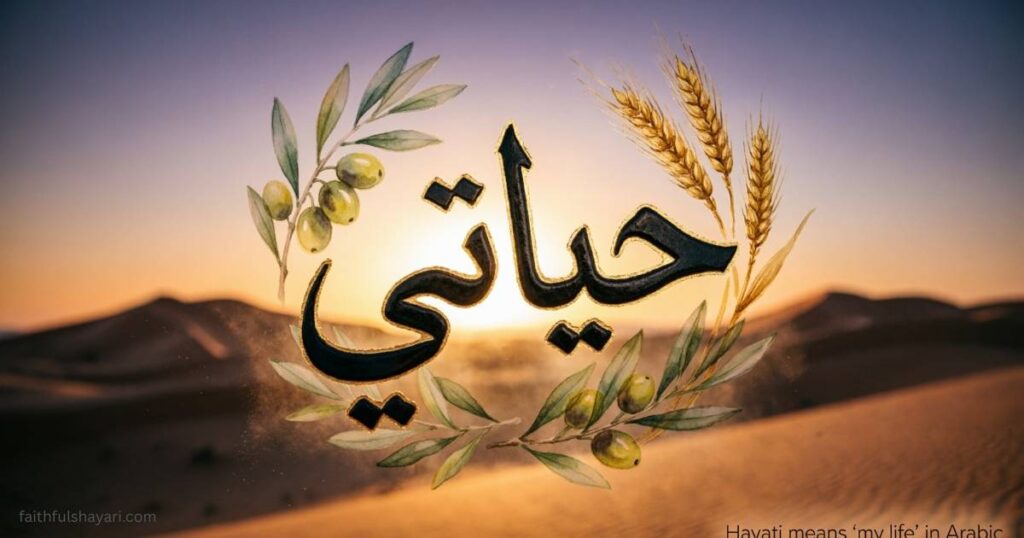
In Arabic, hayati literally means “my life.” The word carries deep emotional meaning because in Arabic culture, calling someone your “life” suggests they are essential to your existence.
This is why hayati meaning in Arabic goes beyond a simple compliment. It’s an expression of deep affection, similar to saying “my everything” or “my darling” in English.
Linguistic Root and Grammatical Usage
The Arabic root word behind hayati is hayat (life), which itself comes from the Arabic root ح-ي-ي (H-Y-Y). This three-letter root relates to concepts of life, living, and vitality across many Arabic words.
Adding the possessive suffix “i” turns hayat into hayati, meaning “my life.” This is a common pattern in Arabic grammar for creating possessive nouns.
Root Word Family Table (Hayah, Hayy, Mahya)
| Arabic Word | Root | Meaning |
| Hayah | ح-ي-ي | Life |
| Hayy | ح-ي-ي | Living, alive |
| Hayati | ح-ي-ي | My life |
| Mahya | ح-ي-ي | Existence, life course |
Hayati Meaning and Arabic Pronunciation
Getting the hayati pronunciation right matters, especially if you plan to use this word with someone who speaks Arabic natively. It’s a short word, but the stress falls in a specific place.
Many learners mispronounce it because English doesn’t have the same throaty “H” sound found in Arabic. Practicing the sounds separately can help before combining them.
Pronunciation Guide
- Hayati is pronounced “ha-YAH-tee”
- The “H” is soft, similar to a breathy exhale
- Stress falls on the middle syllable “YAH”
- The final “tee” sound is short and light
Examples of “Hayati” in Arabic Sentences
Seeing hayati used in real sentences makes the meaning click faster than definitions alone. It’s flexible enough to fit romantic messages, family conversations, and casual affection.
Below are common examples showing how native speakers naturally use this word in everyday Arabic.
A Deeper Look at “Ya Hayati”
Ya hayati meaning combines “ya” (an Arabic vocative form used to address someone directly) with “hayati” (my life). Together, ya hayati means “oh my life” and is used to call out to someone with affection.
You’ll often hear ya hayati meaning in Urdu-speaking communities too, since many South Asian Muslims pick up Arabic terms of affection through religious and cultural exposure.
Family and Parental Usage Examples
- A mother might call her child “hayati” to express unconditional love
- Siblings use it casually to show closeness
- Grandparents often use hayati as a gentle pet name for grandchildren
- It’s common in family group chats as a warm greeting
Literal Translation of “Hayati”
The literal meaning of hayati is straightforward: “my life.” There’s no hidden or symbolic translation beyond this direct meaning.
What makes it powerful isn’t complexity; it’s simplicity. Telling someone they are your “life” is one of the most direct declarations of value in Arabic.
Word Components of “Hayati”
Breaking down hayati into its word components helps explain why it carries such weight. The word combines two grammatical pieces.
Understanding this word breakdown makes it easier to recognize similar possessive Arabic words in the future.
- Hayat = life (the root word)
- -i = possessive suffix meaning “my”
- Hayati = “my life” (the complete possessive noun)
Cultural and Quranic Significance of “Hayati”
The concept of hayat (life) holds Quranic significance in Islamic teaching, where life is described as a gift and a test. While “hayati” itself is not a religious term, its root carries spiritual weight in Arabic-speaking and Muslim communities.
This cultural backdrop is part of why the word feels so meaningful when used between people who share deep trust.
Cultural Reflections of “Hayati”
- Life is treated as sacred in Arabic and Islamic thought
- Calling someone “my life” reflects how central they are to one’s world
- The word is used respectfully across generations, not just romantically
- It reflects broader Arabic culture around expressing loyalty and closeness
Hayati Meaning in Islam Explained
While hayati is not a religious word on its own, it connects to the Islamic meaning of life, which is viewed as a trust from God. This is part of why family affection terms rooted in “hayat” feel spiritually significant to many Muslims.
Scholars don’t classify hayati as a religious phrase, but its emotional depth is shaped by how life itself is honored in Islamic teaching.
Hayati Meaning Table: Wife, Life, Love
| Context | Hayati Meaning |
| Literal | My life |
| Romantic partner | Term of love, sometimes used like “my wife” affectionately |
| Family | Term of deep affection, not a literal relationship |
| Friendship | Close bond, used casually |
Arabic vs. Urdu: Hayati Meaning in Urdu
Hayati meaning in Urdu isn’t a native Urdu word, but it’s widely understood and used by Urdu speakers due to shared Islamic and cultural ties with Arabic. Many Urdu speakers use hayati the same way Arabic speakers do, as a romantic or affectionate term.
You’ll also find hayati meaning in Hindi communities for similar reasons, especially among Muslim families who blend Arabic phrases into everyday speech.
- Hayati meaning in Tamil, hayati meaning in Bengali, and hayati meaning in Telugu communities often understand it through religious or Bollywood exposure
- Hayati meaning in Malayalam is common in Muslim-majority regions of Kerala
- Hayati meaning in Swahili exists too, since Swahili has heavy Arabic influence from historical trade routes
Hayati Meaning in English
In English, hayati meaning in English is simply “my life.” It’s used the same way English speakers might say “my darling,” “my dearest,” or “my everything.”
There isn’t a single-word English equivalent that captures the same emotional meaning, which is why many people prefer using the original Arabic term.
Hayati Meaning in Arabic Text
When written in Arabic script, hayati appears as حياتي. Reading it in Arabic text helps learners connect the pronunciation to the actual spelling.
Seeing the word in native script also makes it easier to recognize related words like hayah (life) and hayy (alive).
Hayati in Arabic for Males
Hayati in Arabic for males works the same grammatically as it does for females. The word itself doesn’t change based on the gender of the person saying it or receiving it.
A man can call his partner, mother, or close friend “hayati,” and it carries the same “my life” meaning regardless of who says it.
Hayati Meaning in Arabic from a Girl
When a girl says hayati meaning in Arabic to someone, it usually reflects strong emotional closeness. It’s rarely used casually with strangers or new acquaintances.
Context always matters here. A girl using this word with a romantic partner sends a very different signal than using it with a sibling or close friend.
Hayati Meaning: Male or Female?
Hayati meaning male or female is not gender-specific. The word itself doesn’t change form based on whether the speaker or the person being addressed is male or female.
This makes hayati a flexible, unisex term of endearment used across many types of relationships in Arabic-speaking cultures.
Inta Hayati Meaning in Arabic
Inta hayati meaning combines “inta” (you, masculine) with “hayati” (my life), translating to “you are my life.” For a female recipient, “inti hayati” is used instead, since Arabic changes “you” based on gender.
This phrase is a strong romantic declaration, often reserved for serious relationships or marriage.
“My Hayati” Meaning Explained
The phrase “my hayati” is a bit redundant since hayati already means “my life,” but it’s commonly used in casual English-Arabic mixed speech. My hayati meaning in Arabic contexts usually just informally reinforces affection.
You’ll often see this phrase used online, especially in captions and comments where people mix languages naturally.
What It Means When a Girl Says “Hayati”
When trying to understand hayati meaning from a girl, look at the surrounding context of the relationship. It could mean anything from playful affection to serious romantic feelings.
Romantic Context
- Often used between girlfriend and boyfriend
- Common in engagement or marriage relationships
- Signals emotional investment, not just friendliness
Meaning Behind It
- Reflects how important the person is to her
- Rarely used lightly in Arabic-speaking cultures
- Can indicate she sees a future with that person
Different Relationship Contexts of “Hayati”
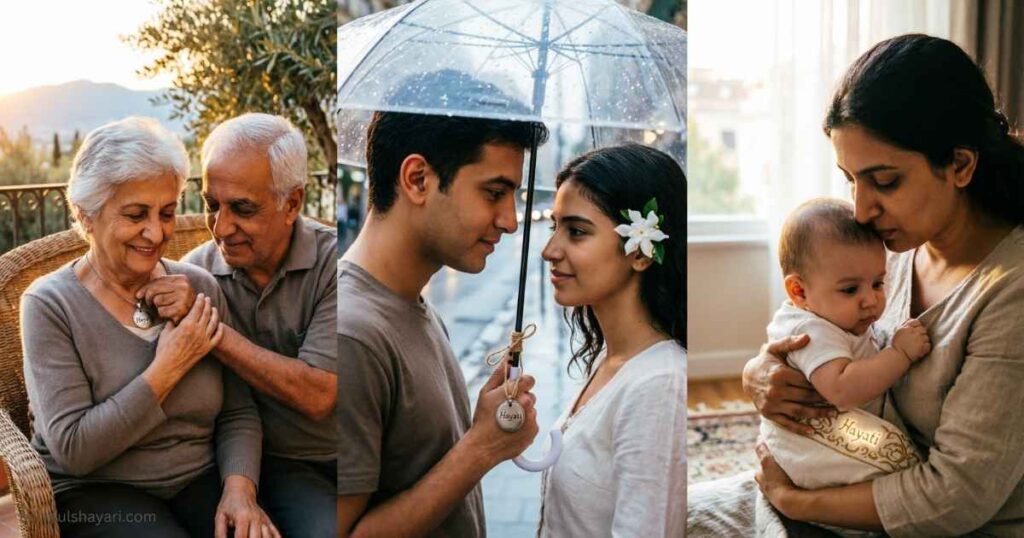
Hayati changes meaning slightly depending on who says it and to whom. A parent, sibling, friend, or romantic partner will all use the word with different intentions behind it.
Recognizing the relationship context helps avoid misreading the emotional weight of the word.
Common Ways Girls Use “Hayati”
- As a pet name for a boyfriend or husband
- To express gratitude toward someone who helped her
- Casually with close female friends
- In social media captions and comments
Intensity and Significance of “Hayati”
Hayati carries more emotional weight than many casual English pet names. It signals deep affection rather than a lighthearted compliment.
Emotional Depth
Calling someone your “life” implies they hold central importance in your world. It’s rarely used for people who don’t matter deeply.
Cultural Importance
In Arabic culture, words like hayati are chosen carefully. Overusing such terms with people outside close relationships is uncommon.
Similar Terms Girls Might Use
- Habibi / Habibti (my love)
- Qalbi (my heart)
- Roohi (my soul)
- Omri (my life, literally “my age”)
- Amri (my command, used affectionately)
Regional Usage Differences of “Hayati”
Arabic is spoken across many countries, and hayati usage can shift slightly by region. Tone, frequency, and context all vary based on local dialects.
Egyptian Arabic
Hayati is extremely common in Egyptian Arabic, often used in music, movies, and everyday conversation between couples.
Gulf Arabic
In Gulf Arabic, hayati is used similarly but may sound slightly more formal in tone compared to Egyptian usage.
Levantine Arabic
Levantine speakers (Lebanon, Syria, Jordan, Palestine) use hayati frequently, often alongside “albi” (my heart).
North African Arabic
North African Arabic (Morocco, Algeria, Tunisia) also uses hayati, though local dialects may blend in French or Berber influences.
Turkish and Persian Equivalents
Turkish speakers often say “hayatım,” which is nearly identical in meaning to the Arabic hayati. Hayatim meaning in Turkish is “my life,” following the same possessive pattern.
Persian speakers use different terms like “azizam” (my dear), though the emotional function is similar to hayati.
What It Means for Your Relationship
If someone consistently calls you hayati, it often signals a serious level of emotional closeness. It’s worth paying attention to how often and in what context the word is used.
Positive Indicators
- Used consistently, not just once
- Paired with other affectionate actions
- Said sincerely, not jokingly
Not Just Casual Flirting
Hayati typically indicates more than surface-level flirting. In most Arabic-speaking cultures, it suggests genuine emotional investment.
Context Matters When Using “Hayati”
The same word can mean different things depending on tone, relationship, and setting. Always read the full context before assuming romantic intent.
How to Respond When a Girl Says “Hayati”
Responding well depends on how you feel and how well you know the person. There’s no single “correct” reply, but there are better and worse approaches.
If You Share the Feelings
- Reply with a similar term like “hayati” or “habibti”
- Express genuine appreciation
- Keep the tone warm and sincere
If You’re Unsure
- Respond kindly without overcommitting
- Ask questions to understand her intent
- Avoid dismissing the term outright, as it can come across as rude
Witty and Playful Replies
- “Careful, I might start believing you”
- “Only if you mean it”
- “Say that again, I liked it”
Sincere and Romantic Replies
- “You mean just as much to me”
- “That means more than you know”
- “I feel the same about you”
How to Reply to “Hayati” Comments
Replying to hayati comments on social media requires a slightly different approach than private messages. Public replies are seen by others, so tone matters even more.
Keeping replies natural and appropriate to the platform helps maintain good engagement without appearing forced.
Reply Etiquette and Tone Guide
- Match the energy of the original comment
- Avoid overly intense replies to casual comments
- Keep humor light unless the relationship is close
Professional vs Casual Responses
| Setting | Suggested Reply Style |
| Professional page | Simple thank you, no romantic tone |
| Personal profile | Warm, friendly response |
| Close friend/partner | Affectionate or playful reply |
Reply Templates You Can Use
- “Thank you, that’s so sweet of you”
- “Aw, you made my day”
- “That’s really kind, appreciate you”
Dealing with Rude Comments
If “hayati” is used sarcastically or inappropriately by a stranger, a short, neutral reply or simply ignoring the comment is often best.
Platform-Specific Reply Tips
- Instagram: Keep replies short with emojis
- Facebook: Slightly longer, conversational replies work well
- TikTok: Quick, casual, and light-hearted responses fit best
Best Reply Strategies for Engagement
- Reply promptly to keep engagement active
- Personalize responses instead of generic replies
- Ask a follow-up question to continue the conversation
- Use emojis sparingly to match tone
Red Flags vs. Green Flags When She Says “Hayati”
Green Flags (Signs of True Affection)
- Consistent, genuine use over time
- Paired with respectful behavior
- Used in both public and private settings
Potential Red Flags (Be Mindful)
- Used only during arguments to manipulate emotions
- Said inconsistently or insincerely
- Used with multiple people carelessly
Cultural Sensitivity When Using “Hayati”
Respect the Meaning
Since hayati carries deep emotional meaning, using it carelessly can be seen as disrespectful in Arabic culture.
Family and Social Context
In some families, using romantic Arabic love words publicly may not align with cultural or religious expectations, so awareness matters.
Qalbi Meaning in Arabic
Qalbi means “my heart” in Arabic, coming from the root word “qalb” (heart). It’s another common Arabic term of affection, similar in emotional weight to hayati.
Ya Qalbi Meaning in Arabic
Ya qalbi meaning combines “ya” (a vocative form) with “qalbi” (my heart), translating to “oh my heart.” It’s used similarly to ya hayati, often interchangeably in romantic conversations.
Other Arabic Love Words Similar to “Hayati”
Arabic has many terms of endearment beyond hayati, each with slightly different emotional nuance. Learning a few helps you understand Arabic conversations about love more fully.
Habibi Hayati Meaning Compared
Habibi means “my love,” while hayati means “my life.” Together, Habibi hayati meaning often shows up in songs and messages, combining both terms for extra emotional emphasis.
Comparison Table: Hayati vs Habibi vs Albi vs Rohi
| Word | Literal Meaning | Common Use |
| Hayati | My life | Deep affection, romantic or family |
| Habibi | My love | General term of love, widely used |
| Albi/Qalbi | My heart | Romantic, emotional closeness |
| Roohi | My soul | Deep spiritual/emotional bond |
Common Misunderstandings or Mistakes with “Hayati”
- Assuming hayati always means romantic interest
- Confusing hayati with hayat (life) without the possessive meaning
- Overusing the term with people outside close relationships
- Mispronouncing it due to unfamiliar Arabic sounds
The Emotional Power of “Hayati”
Hayati remains one of the most emotionally rich Arabic love words because of its direct meaning. Telling someone they are your “life” leaves little room for ambiguity.
Examples of Use
- A husband calling his wife “hayati” daily
- A mother comforting her child with “ya hayati”
- Close friends using it to express deep gratitude
“Hayati” in Songs, Movies, and Everyday Life
Hayati appears frequently in Arabic music and film, often in romantic contexts. Its popularity in media has helped spread the word to non-Arabic speakers worldwide, including through Turkish dramas using “hayatım.”
Learning Arabic Through Words Like “Hayati”
Learning emotionally rich words like hayati is a great way to build vocabulary while understanding Arabic culture more deeply.
Tips for Learners
- Practice pronunciation with native audio
- Learn the root word system to understand related terms
- Study words like qalbi, roohi, and omri alongside hayati
Why You Should Learn “Hayati”

Understanding hayati meaning gives you insight into how Arabic speakers express love, family bonds, and closeness. It’s a small word with a powerful message: that someone truly matters.
Best Writer Bio for Instagram (Copy-Paste) | Stylish, Cool Bio ideas
FAQs
Can you say Hayati to a girl?
Yes, understanding hayati meaning shows it works for any gender. You can call a girl “hayati” to express deep affection, love, or close emotional bonding.
Can I call my man Hayati?
Absolutely. Hayati meaning isn’t gender-specific, so calling your man “hayati” is common and appropriate, showing he holds deep importance and value in your life.
What do Arabs call their lover?
Beyond hayati meaning, Arabs use terms like habibi/habibti (my love), qalbi (my heart), and roohi (my soul) to express romantic affection toward a lover.
When a guy calls you Hayati?
When a guy uses hayati meaning toward you, it usually signals genuine emotional closeness or romantic interest, treating you as someone essential and irreplaceable in his life.
How do Muslims say “I love you”?
Muslims often use Arabic phrases like “uhibbuka/uhibbuki” (I love you) alongside affectionate terms such as hayati meaning “my life” to express love and closeness.
Is it racist to say habibi?
No, saying habibi isn’t racist. Like hayati meaning “my life,” it’s a genuine Arabic term of endearment used respectfully across cultures, not a slur or mockery.
Conclusion
Hayati meaning boils down to one powerful idea: “my life.” Whether you hear ya hayati meaning from a partner, family member, or friend, always judge it by consistency and context, not just the words themselves. Hayati meaning in Arabic carries real emotional weight, so a sincere, warm reply works better than overthinking a witty comeback. If you’re unsure how to respond, keep it simple and genuine rather than dismissive.
For learners searching for hayati meaning in Tamil or other regional translations, remember that Arabic terms like this rarely have a perfect single-word match. Practice using it naturally, pay attention to who says it and how often, and let your response match the sincerity behind the word.
