

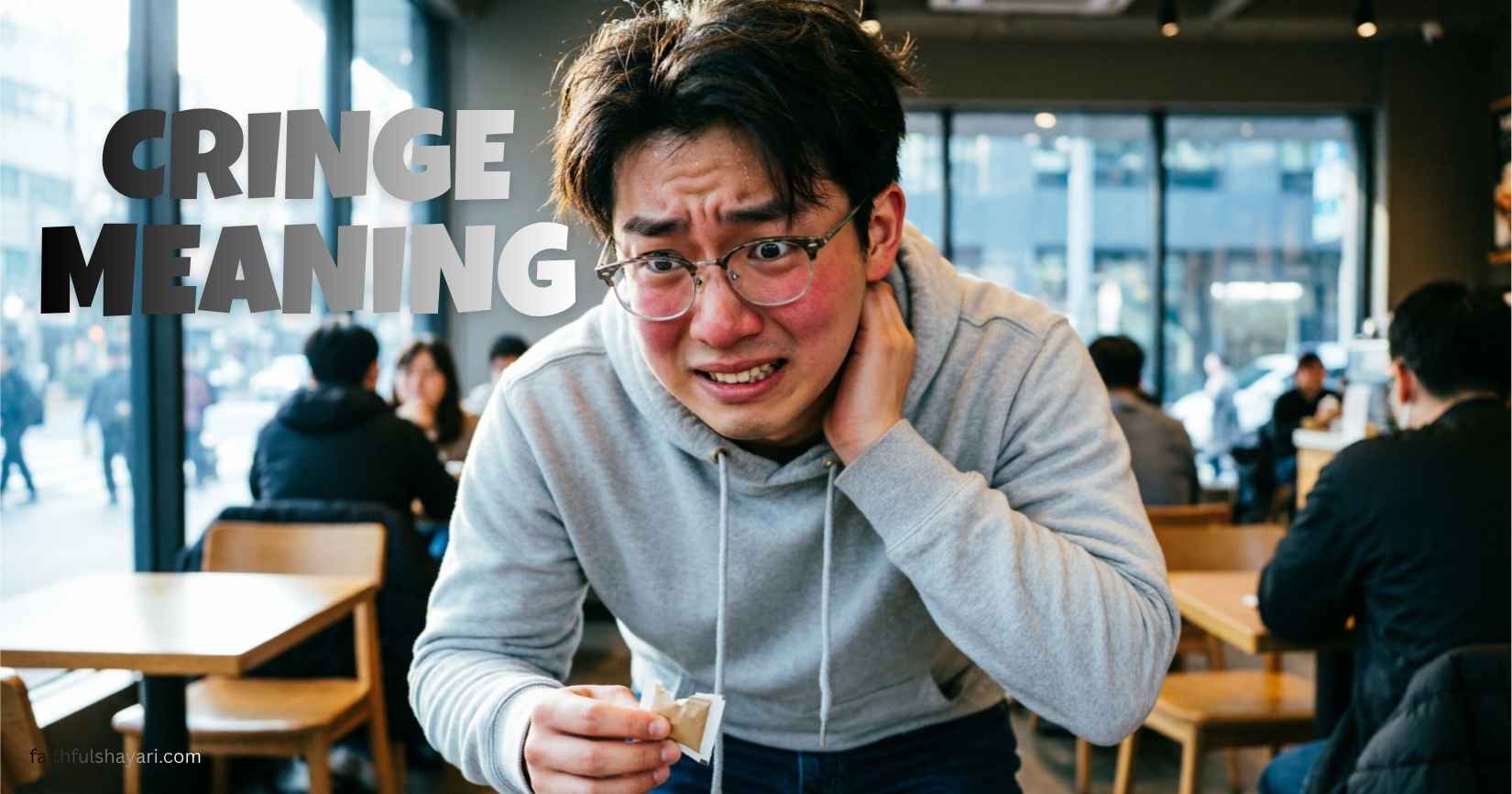
When you scroll online and feel that awkward moment, Cringe Meaning suddenly makes sense right. You see videos or posts that make you look away but still keep watching anyway. Everyone experiences this feeling but cannot explain it clearly in daily internet life sometimes happens. It feels weird yet relatable and connects deeply with modern online behavior we all share.
This guide to Cringe Meaning will help you understand why people react this way online. We break down slang origins emotions and real examples from social media platforms today clearly. You will also learn how cringe connects with embarrassment and everyday awkward situations in life. By the end you will confidently understand and use this modern slang correctly in context.
What exactly does “cringe” mean?
Cringe Meaning refers to that strong feeling of embarrassment or discomfort you get when something feels awkward or socially uncomfortable. People often say it when they see or hear something that feels weird or hard to watch. In simple terms, it describes a reaction to awkward behavior or moments.
Cringe Meaning is commonly used in internet slang to express secondhand embarrassment. It happens when you watch someone doing something awkward, even if it is not directly happening to you. The term is popular in memes, videos, and social media conversations where people react to funny or uncomfortable situations online.
What Is the Origin of the Word Cringe?

The Cringe Meaning has roots in the old English word “cringan,” which meant to bend or shrink back in fear. Over time, it started describing physical reactions to fear or discomfort. Today, it is widely used to express emotional reactions to awkward or embarrassing situations in daily life.
Cringe Meaning evolved in modern internet culture where people use it as slang. It became popular through memes and social media platforms where users reacted to awkward videos or behavior. Now, it is not only about fear but also about embarrassment, awkwardness, and secondhand discomfort online.
Is Cringe Youth Slang or a Commonly Used Word?
Cringe Meaning is both youth slang and a commonly used word today. It started as a general English word describing a physical reaction to discomfort or fear. Over time, younger generations adapted it to describe awkward or embarrassing moments in everyday conversations and online interactions.
Cringe Meaning is now widely understood across all age groups, not just youth. It is heavily used in social media, memes, and casual speech to describe awkward behavior or secondhand embarrassment. While it began as slang, it has become a normal part of modern everyday language.
Cringe as a Feeling
Cringe Meaning as a feeling refers to the strong emotional reaction of embarrassment, discomfort, or awkwardness when witnessing something socially uneasy. It often happens instantly when a person sees or hears something that feels inappropriate, strange, or hard to watch in real life or online content.
This feeling is deeply connected to human empathy and social awareness. It appears when your brain reacts to situations that break normal social expectations, creating a sense of discomfort or secondhand embarrassment. The interpretation may vary depending on the situation.
- It can be triggered by awkward behavior in public, such as someone making an unusual comment or mistake.
- Many people feel it while watching viral videos or cringe-worthy moments on platforms like TikTok or YouTube.
- In some cases, it reflects empathy, where you feel embarrassed on behalf of someone else.
- However, it can also be subjective, meaning what feels cringe to one person may seem funny or normal to another.
- It plays a big role in online culture, where memes and cringe content often go viral due to shared reactions.
Second-Hand Embarrassment
Ever watched someone do something so awkward that you physically felt uncomfortable for them? That strange, almost stomach-turning reaction is called second-hand embarrassment, and it is closely tied to Cringe Meaning in everyday language.
In simple terms, it happens when you feel embarrassed on behalf of someone else, even though you are not involved in the situation. It often shows up while watching awkward moments online or in real life, especially when social expectations are broken in a noticeable way. It is your mind reacting as if you are in their place.
Think of it like emotional “mirroring.” Your brain imagines how the other person should feel, and you end up feeling it yourself.
- It often appears in social media videos where someone makes a public mistake, like forgetting lines or acting overly confident in a wrong situation.
- Many people experience it while watching cringe comedy shows or awkward interviews, such as scenes in The Office with Michael Scott.
- It can be stronger for people who are highly empathetic, because they naturally feel others’ emotions more deeply.
- Interestingly, some viewers enjoy it in entertainment form, even though it feels uncomfortable, which is why cringe content often goes viral.
- It also helps explain social awareness, because it reflects how we learn what behavior is socially acceptable or not.
The key takeaway is simple: second-hand embarrassment shows how connected human emotions are. Even when nothing is happening to you directly, your mind still reacts strongly, making it a powerful part of Cringe Meaning in modern internet culture.
Cringe in Internet Culture
Cringe Meaning in internet culture refers to content that feels awkward, embarrassing, or uncomfortable to watch online. It often includes videos, memes, or posts where people act unusually or break social norms. These moments trigger strong reactions, especially when viewers feel secondhand embarrassment while scrolling social media platforms daily.
Cringe Meaning has become a major part of online entertainment and meme culture. Platforms like TikTok, YouTube, and Reddit often highlight cringe content that goes viral quickly. While some people enjoy it for humor, others find it uncomfortable. Still, it plays a big role in shaping modern internet trends today.
Cringe and Social Media
Cringe Meaning on social media refers to awkward, embarrassing, or uncomfortable content that users often react to while scrolling online. It is commonly seen in posts, videos, and comments where people behave in unusual or socially awkward ways. This type of content often spreads quickly due to strong emotional reactions.
On platforms like TikTok, Instagram, YouTube, and Reddit, Cringe Meaning has become a popular part of internet slang and meme culture. The interpretation may vary depending on the situation.
- Some users find cringe content funny and entertaining, especially in meme culture or cringe comedy clips.
- Others feel secondhand embarrassment when they see awkward behavior, such as failed challenges or forced humor in viral videos.
- Social media algorithms often promote such content because it gets high engagement and reactions from viewers.
- In some cases, cringe content can lead to online shaming, where people are criticized for awkward or unpopular posts.
- However, it can also encourage creativity, as creators learn what audiences find relatable or uncomfortable.
Examples of Cringe Situations
Cringe Meaning becomes very clear when you look at real-life situations where people feel awkward, embarrassed, or uncomfortable because of unexpected or socially unusual behavior happening around them.
- Someone loudly singing badly in public transport
- A person giving an overconfident but wrong presentation
- Watching old embarrassing social media posts
- Forced jokes that nobody laughs at
- Awkward silence during a first date
- Overacting in a simple conversation
- Someone falling while trying to look cool
- Excessive self-praise in front of others
- Cringy dance moves in public places
- Trying too hard to impress others
- Misusing slang in the wrong context
How to Handle Cringe Moments
Ever felt your face heat up after doing something awkward in front of others? That instant wave of embarrassment is something everyone goes through, and it is closely linked to Cringe Meaning in daily life and online situations.
Cringe moments can feel intense in the moment, but they are usually not as serious as they seem. Most people forget them quickly, even if your mind keeps replaying them. Think of it like a small mental glitch that feels bigger than it really is.
The interpretation may vary depending on the situation, but how you respond can change everything.
- Pause and breathe instead of reacting instantly: When you feel embarrassed, take a second to calm your thoughts. Most cringe moments feel worse because of overthinking, not reality.
- Remind yourself that everyone makes mistakes: Even confident people have awkward moments. A small slip or strange comment does not define you in social situations.
- Use humor to reduce tension: Laughing at yourself can turn an uncomfortable moment into a light one. It helps others relax too and breaks the awkward mood naturally.
- Shift focus away from the situation: Instead of replaying the moment in your mind, move your attention to something positive or productive around you.
- Learn from it without overthinking: Some cringe experiences highlight social boundaries or communication mistakes. Take the lesson, but don’t carry the embarrassment with you.
A helpful mindset shift is understanding that most people are too focused on themselves to remember your awkward moment. Once you accept that, Cringe Meaning becomes less about fear and more about normal human experience.
Why Cringe Will Always Exist

Cringe Meaning will always exist because people naturally feel emotions like embarrassment, awkwardness, and discomfort in social situations. Human behavior is unpredictable, and not everyone acts in the same way. When these differences appear, they often create moments that feel awkward or uncomfortable for others to watch or experience.
Cringe Meaning also survives because internet culture constantly shares real-life and online moments. Social media highlights awkward clips, making them go viral quickly. Since people will always make mistakes or act differently, cringe moments will continue to appear in daily life, entertainment, and online platforms across the world.
Gen Z Meaning Explained: Age Range, Traits, and Modern Culture
FAQs
What does Cringe Meaning refer to in simple language?
It describes a feeling of embarrassment or discomfort when seeing awkward behavior. People react emotionally to strange or uncomfortable situations online or offline.
How did Cringe Meaning start in modern usage?
It began as an old English word meaning to shrink back in fear. Later it evolved into slang for awkward or embarrassing moments online.
Which situations create Cringe Meaning reactions most often?
Awkward speeches, failed jokes, or unusual public behavior often trigger it. People feel discomfort when social expectations are broken unexpectedly.
Why do people experience Cringe Meaning feelings?
The brain reacts to social mistakes by imagining embarrassment. This creates secondhand discomfort when watching or hearing awkward situations happen.
Can Cringe Meaning change across different cultures or ages?
Yes, perception varies widely between cultures and generations. Something awkward for one group may seem funny or normal to another group.
Conclusion
In conclusion, Cringe Meaning is about feelings of embarrassment, awkwardness, or discomfort in different situations. This helps explain how people react to strange or socially unusual behavior. The concept appears in real life and online content. It is often linked with secondhand embarrassment and social awareness. It shows how humans respond naturally to awkward or uncomfortable moments in daily interactions and internet culture.
Overall, Cringe Meaning has become an important part of modern slang and online communication. It is widely used in memes, videos, and social media discussions. Understanding it helps you know why certain moments feel funny or uncomfortable. It will always exist because people continue to experience awkward situations. In simple words, it reflects normal human emotions and reactions in social life and digital spaces.
