

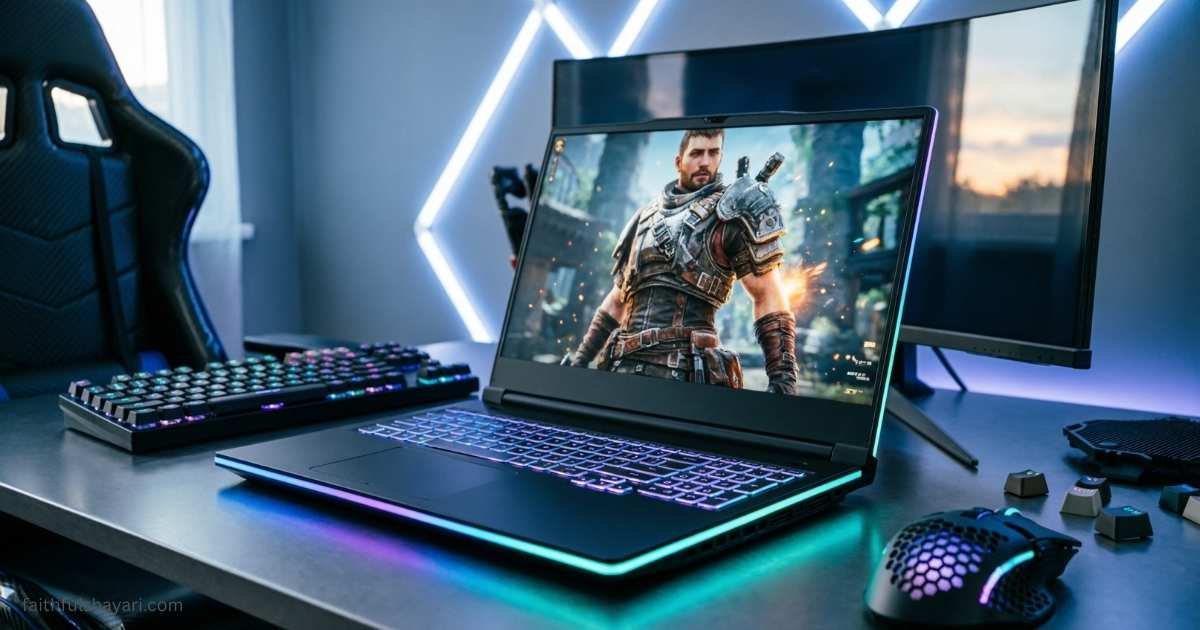
Finding a trustworthy gaming laptop review sometimes feels impossible. Every site seems sponsored, every score feels inflated, and every “honest” guide is just a list of Amazon affiliate links. If you’ve ever bought a laptop based on a glowing review — only to watch it throttle during your first gaming session — you already know the problem. That’s exactly why so many people are searching for TheLaptopAdviser Expert Gaming to get answers they can finally trust.
TheLaptopAdviser Expert Gaming is what this guide is all about — from the laptopadviser expert reviews that cut through the marketing fluff to the laptopadviser buyer guide that helps you spend smarter. Whether you’re after expert reviews thelaptopadviser readers trust, expert gaming thelaptopadviser coverage for high-performance machines, or even thelaptopadviser education laptops picks for students who game on a budget — you’re in the right place. By the end, you’ll know exactly what to look for, what to avoid and how to find a laptop that actually delivers.
Expert Reviews TheLaptopAdviser Latest Laptop Test Reports
When you’re spending hundreds — sometimes thousands — on a gaming laptop, you need more than a spec sheet. Expert reviews from TheLaptopAdviser go beyond surface-level impressions to deliver real-world testing data you can actually use.
Most laptop reviews online skim the surface. They list specs, take a few screenshots and call it a day. TheLaptopAdviser takes a different approach. Every test report covers benchmark testing, thermal management, display quality, battery life and real-world gaming performance — all measured under consistent conditions. That kind of depth is rare, and it’s exactly what separates a genuine expert review from a glorified product listing.
The interpretation of any laptop test report may vary depending on the situation — a result that’s impressive for a student might fall short for a competitive gamer running AAA titles at 1440p.
Here’s what makes TheLaptopAdviser’s latest laptop test reports stand out:
- Real-world FPS testing — Scores are recorded during actual gameplay, not just synthetic benchmarks. You see how the GPU performance holds up when it matters most.
- Thermal throttling checks — Every laptop is stress tested under full load. If a machine throttles, drops frames or runs dangerously hot, the report says so clearly.
- Display quality analysis — Reviews measure colour accuracy, refresh rate, panel type and brightness in nits — not just “looks good” impressions.
- Honest scoring — TheLaptopAdviser doesn’t accept sponsorships for reviews. Scores reflect actual performance, not marketing budgets.
- Battery life under load — Results include both idle and gaming battery drain, so you know what to expect in real use — not just manufacturer claims.
Thelaptopadviser Expert Gaming

If you’re serious about gaming performance, TheLaptopAdviser Expert Gaming section is built for you. It covers everything from GPU performance and CPU benchmarks to cooling system efficiency and FPS testing across popular AAA titles. You won’t find vague impressions here — just clear, data-backed results that tell you exactly how a laptop performs when the pressure is on.
Choosing the right gaming laptop in 2026 isn’t simple. Brands throw big numbers at you, but real-world performance often tells a different story. TheLaptopAdviser Expert Gaming cuts through that noise with honest, independent reviews and stress test results you can trust. Whether you’re eyeing a budget gaming laptop under $800 or a high-performance machine for demanding titles, this is where smart buyers start.
What Is TheLaptopAdviser and Why Should You Trust It?
Honest laptop advice is harder to find than you’d think — and that’s exactly the problem TheLaptopAdviser was built to solve.
Think of TheLaptopAdviser as that tech-savvy friend who actually owns the laptops, tests them properly and gives you a straight answer. No sugarcoating. No sponsored fluff. Just real information from people who genuinely care about helping you spend wisely. In a world full of affiliate-driven “best of” lists, that kind of independence is refreshing.
Here’s why readers keep coming back:
- Fully independent testing — TheLaptopAdviser doesn’t take payments from manufacturers to influence scores. Every review reflects actual benchmark testing, thermal management results and real-world performance data. What you read is what the laptop actually does.
- Structured, repeatable methodology — Every laptop goes through the same testing process. FPS testing, stress tests, battery life under load, display quality checks — all measured consistently. That means you can compare results across different models without second-guessing the numbers.
- Written by people who game — Reviews aren’t outsourced to generalist writers. The team understands GPU performance, thermal throttling, RAM capacity trade-offs and why a 90Hz panel might matter more than raw clock speed for your use case.
- Coverage across all budgets — Whether you’re hunting for a budget gaming laptop under $800 or researching a high-performance machine for AAA titles, TheLaptopAdviser covers the full spectrum. You’re not just seeing premium picks — you’re seeing honest value-for-money comparisons.
- No hidden agenda — Many review sites bury negative findings to protect brand relationships. TheLaptopAdviser calls out thermal throttling issues, poor colour accuracy, weak cooling systems and disappointing battery life — even on popular models.
Trust comes from consistency and honesty. TheLaptopAdviser has built its reputation by saying what others won’t — and backing every claim with data.
How Experts Actually Test Laptops: The Real Process
Most people assume laptop testing means running a quick benchmark and writing up results. In reality, expert testing is a structured, multi-stage process that takes hours — sometimes days — to complete.
Real-world testing means pushing a laptop through CPU and GPU stress tests, measuring thermal throttling under sustained load and recording FPS across AAA titles. It also means testing battery life under actual gaming conditions — not manufacturer claims based on video playback. The goal is simple: find out what the laptop actually does, not what the spec sheet promises.
Results may vary depending on the situation — a laptop that handles light gaming well might struggle under professional workloads or extended streaming sessions.
Here’s how the real testing process breaks down:
- Benchmark testing first — Experts run standardised tools to measure raw CPU and GPU performance before anything else. This creates a baseline that makes cross-model comparisons fair and reliable.
- Sustained stress testing — A laptop is pushed to full load for 30–60 minutes. This reveals whether thermal management holds up or the system starts throttling to protect itself. Many mid-range laptops look great in short bursts but struggle here.
- Real-world FPS testing — Synthetic scores only tell part of the story. Experts record frame rates during gameplay across different titles and resolutions — 1080p, 1440p — to see how the machine performs where it counts.
- Display quality measurement — Colour accuracy, refresh rate, panel type and brightness in nits are measured with dedicated tools. A laptop with a 300 nits display might look fine indoors, but becomes unusable in natural light.
- Battery life under load — Experts record drain rates during active gaming sessions, not idle use. A laptop claiming 10 hours might deliver just 2–3 hours under real gaming conditions — and buyers deserve to know that.
Laptop Categories Covered: Finding Your Perfect Match
Not every laptop is built the same way, and not every buyer needs the same thing. TheLaptopAdviser covers every major category so you can find a machine that fits your budget, your lifestyle and your performance needs without overpaying for features you’ll never use.
Picking the wrong category is one of the most common and costly mistakes buyers make. Whether you’re a casual gamer, a content creator or a student who games on weekends, there’s a laptop built specifically for you. Understanding the right category saves you money and frustration before you ever open the box.
| Laptop Category | Best For | Approximate Price Range |
| Entry-Level Gaming Laptop | Beginners and casual players looking for playable performance on older titles and indie games without a heavy investment. Great starting point for new gamers. | $400 — $700 |
| Mid-Range Gaming Laptop | Everyday gamers who want smooth FPS, a quality display and dependable cooling without stretching their budget to the limit. The sweet spot for most buyers in 2026. | $700 — $1,200 |
| High-Performance Gaming Laptop | Serious gamers running demanding AAA titles at 1440p or higher. Expect powerful GPU performance, advanced cooling systems and fast NVMe SSD storage. | $1,200 — $1,800 |
| Creator and Gaming Hybrid | Video editors, streamers and designers who also game. These machines balance strong CPU performance, colour-accurate displays and solid RAM capacity for multitasking. | $1,300 — $2,000 |
| Student Gaming Laptop | College and university students who need a reliable all-rounder for study, gaming and everyday use. Durability and battery life matter as much as frame rates here. | $500 — $900 |
| Desktop Replacement Gaming Laptop | Power users who want desktop-level performance in a portable form. Heavy, powerful and best used mostly at a desk with a power cable nearby. | $1,800 — $3,000+ |
Key Features That Actually Matter When Buying a Laptop

Not every spec on a laptop listing actually affects your experience. Brands love throwing big numbers around, but raw specs don’t always translate to real performance. Knowing which features genuinely matter helps you cut through the noise and focus on what will actually impact your daily use and gaming sessions every time.
Display quality, cooling system efficiency, RAM capacity, SSD storage speed and battery life shape how a laptop feels in real use. A machine with a brilliant spec sheet but poor thermal management will throttle and disappoint fast. Always look beyond the headline numbers and focus on how these features perform together under real-world conditions before making any buying decision.
Processor
The processor is the brain of your laptop, and it affects everything — from how fast games load to how smoothly your system handles multitasking. A weak CPU creates bottlenecks that even the best GPU can’t fix. In 2026, you need a modern multi-core processor to handle demanding games, background apps and streaming without skipping a beat.
Not all processors perform equally under pressure. Some look impressive on a spec sheet but throttle badly once temperatures rise. Always check CPU performance benchmarks under sustained load, not just peak scores. Intel and AMD both offer strong options across different price points, but real-world testing results will always tell you more than manufacturer claims or marketing numbers ever will.
RAM Capacity
RAM capacity directly affects how smoothly your laptop handles gaming, multitasking and background processes all at once. Too little RAM and you’ll notice stuttering, slow load times and poor performance even on a powerful machine. In 2026, 16GB is the bare minimum for serious gaming, and 32GB gives you real headroom for streaming, editing and future-proofing your setup comfortably.
Don’t just look at the amount — RAM speed matters too. Faster RAM reduces bottlenecks between your CPU and GPU, which can have a noticeable impact on frame rates in demanding titles. Many budget gaming laptops ship with slow or single-channel RAM that limits overall performance. Always check the RAM configuration before buying and confirm whether it’s upgradeable down the line.
SSD Storage
SSD storage directly impacts how fast your games load, how quickly your system boots and how responsive your laptop feels during everyday use. In 2026, NVMe SSD is the standard worth insisting on. It’s significantly faster than older SATA drives and makes a real difference when loading large game files, transferring data or running multiple applications simultaneously without frustrating delays.
Don’t overlook storage capacity either. Most modern AAA titles easily consume 50–100GB each, so a 512GB drive fills up faster than you’d expect. A 1TB NVMe SSD hits the sweet spot for most gamers. Also, check whether the laptop has an extra M.2 slot — having room to expand storage later saves you from costly upgrades or constantly deleting games you still want.
Battery Life
Battery life is one of the most misrepresented specs in the laptop industry. Manufacturers test under ideal conditions — low brightness, no gaming, minimal background activity. Real-world results look very different. Under actual gaming conditions, many laptops that claim 8–10 hours deliver just 2–3 hours. Always look for independent battery life testing results before trusting any manufacturer’s published figures.
Gaming laptops naturally consume more power than standard machines, but some handle it far better than others. Efficient thermal management, optimised power settings and a larger battery cell all contribute to longer real-world runtime. If you game on the go regularly, prioritise laptops with at least a 72Whr battery. A good balance between performance and battery life makes your setup genuinely flexible and portable.
Display Quality
Display quality can make or break your gaming experience. A fast processor and powerful GPU mean nothing if your screen can’t keep up. Refresh rate, panel type, colour accuracy and brightness in nits all play a crucial role. A 90Hz or higher refresh rate delivers noticeably smoother gameplay, while a quality IPS panel ensures accurate colours and wide viewing angles every time.
Don’t settle for a dim or washed-out display just because the rest of the specs look impressive. A 300 nits brightness level is the minimum for comfortable indoor use, and anything lower struggles in well-lit environments. Colour accuracy matters especially if you edit photos or videos alongside gaming. Always check independent display quality measurements rather than relying on vague terms like “vivid” or “stunning” in product listings.
Cooling System
A good cooling system is what separates a reliable gaming laptop from a frustrating one. Without proper thermal management, even the most powerful hardware will throttle under sustained load and drag your frame rates down. Heat is the silent killer of gaming performance. A well-designed cooling system keeps your CPU and GPU running at full speed when you need it most.
Fan noise, heat pipe layout and airflow design all affect how well a laptop handles sustained gaming sessions. Some laptops cool efficiently and quietly, while others sound like a jet engine at half load. Always check thermal throttling results from real-world stress tests before buying. A laptop that maintains stable temperatures under full load will consistently outperform a hotter machine with better specs every single time.
The Rating System Explained: How Scores Are Assigned
A reliable laptop review depends on a fair and consistent rating system. Scores are assigned using benchmark testing, real-world testing, performance analysis, and overall value for money.
At TheLaptopAdviser, every gaming laptop is evaluated across multiple categories rather than a single specification. This helps readers understand how a device performs in everyday use, AAA titles, productivity tasks, and long-term ownership.
The interpretation may vary depending on the situation.
- A laptop may receive a high score for GPU performance and frame rates if it delivers smooth gameplay during FPS testing at 1080p or 1440p resolutions.
- Strong CPU performance, fast NVMe SSD storage, and sufficient RAM capacity can improve the overall rating, especially during multitasking and demanding workloads.
- Good thermal management and an effective cooling system often increase scores because they reduce thermal throttling and maintain stable performance under stress tests.
- A laptop with excellent display quality, accurate colours, and a high refresh rate may earn extra points. However, low brightness levels or poor panel quality can lower the final score.
- Battery life, fan noise, build quality, WiFi 6 connectivity, and port selection, such as USB-C, HDMI, and USB-A, also influence ratings. A powerful laptop can still lose points if these areas perform poorly.
Common Buying Mistakes You Must Avoid
Many buyers focus only on price and ignore actual performance. A cheap gaming laptop may look attractive but fail during real-world testing. Some people also choose devices based only on marketing claims. Before buying, always compare CPU performance, GPU performance, RAM capacity, and storage options. Reading an independent review can help you avoid costly mistakes and make a smarter decision.
Another common mistake is ignoring display quality, cooling system performance, and battery life. A laptop with strong specifications can still disappoint if it suffers from thermal throttling or excessive fan noise. Buyers should also check connectivity features such as WiFi 6, USB-C, HDMI, and USB-A ports. Taking time to review benchmark testing results often leads to a better long-term purchase.
- Buying a laptop without checking benchmark testing results.
- Choosing price over long-term performance and reliability.
- Ignoring GPU performance for gaming and creative work.
- Overlooking CPU performance when comparing models.
- Purchasing a system with insufficient RAM capacity.
- Selecting slow storage instead of a fast NVMe SSD.
- Ignoring display quality, refresh rate, and colour accuracy.
- Failing to evaluate cooling system efficiency.
- Not checking battery life under real-world conditions.
- Trusting advertisements without reading independent reviews.
Who Benefits Most from TheLaptopAdviser Reviews?
TheLaptopAdviser reviews help anyone who wants reliable information before buying a laptop. Students, gamers, professionals, and content creators can all benefit from detailed testing and honest recommendations. The reviews simplify complex specifications and explain real-world performance in easy language. This makes it easier to compare models, understand value for money, and choose a laptop that fits specific needs.
People with limited technical knowledge also find these reviews useful. Instead of relying on marketing claims, readers can examine benchmark testing, battery life, display quality, and cooling system results. Budget-conscious buyers benefit from clear comparisons between entry-level and premium models. Even experienced users can use the performance analysis to identify the best gaming laptop or productivity machine for their requirements.
Quick Reference: What to Check Before Buying Any Laptop
Buying a laptop becomes easier when you know what features matter most. Start by checking the processor, RAM capacity, and storage type. These components affect speed and overall performance. Also review display quality, battery life, and build quality. A balanced laptop should meet your daily needs without exceeding your budget or sacrificing important features and long-term reliability.
It is also important to look beyond the spec sheet. Read independent reviews and real-world testing results before making a decision. Check cooling system performance, fan noise, connectivity options, and upgrade possibilities. Comparing several models helps you understand value for money. A little research can prevent mistakes and help you choose a laptop that lasts for years.
Performance Checks:
- Look at processor core counts to ensure smooth multitasking and demanding workloads.
- Compare graphics performance across different games and productivity applications.
- Review frame rate consistency instead of focusing only on peak numbers.
- Check memory configuration to avoid bottlenecks during heavy usage.
- Confirm storage speeds for faster boot times and quicker file transfers.
- Examine gaming results at different resolutions such as 1080p and 1440p.
- Read stress testing reports to see how performance holds over time.
- Compare results from independent reviews rather than manufacturer claims.
- Verify whether the system maintains stable speeds during extended sessions.
- Consider overall performance value instead of choosing specifications alone.
Display Checks:
- Review screen brightness levels for comfortable use in different lighting conditions.
- Compare colour reproduction if you edit photos, videos, or creative projects.
- Look for smooth motion handling during gaming and fast-moving scenes.
- Check viewing angles to ensure the picture remains clear from the sides.
- Evaluate screen resolution based on your work and gaming needs.
- Read display quality tests from trusted and independent reviewers.
- Inspect contrast levels for deeper blacks and better image depth.
- Make sure text appears sharp and easy to read during long sessions.
- Consider screen size and aspect ratio for productivity and entertainment.
- Verify whether the display suffers from ghosting, flickering, or noticeable blur.
Thermal and Battery Checks:
- Examine heat control performance during extended gaming or heavy workloads.
- Read real-world temperature reports from trusted review sources.
- Compare fan sound levels under both light and demanding tasks.
- Check whether performance drops after long gaming sessions.
- Look for efficient airflow designs that help maintain stable operation.
- Review battery endurance during browsing, streaming, and productivity work.
- Compare charging speeds if you frequently work away from a desk.
- Verify power efficiency when running everyday applications and background tasks.
- Search for user feedback about overheating issues after months of use.
- Consider the balance between strong performance and battery longevity.
Build and Connectivity Checks:
- Inspect chassis materials to ensure the laptop feels sturdy and durable.
- Test hinge strength because weak hinges can wear out quickly.
- Make sure the trackpad responds accurately during everyday use.
- Look for modern wireless support, such as WiFi 6, for faster connections.
- Confirm enough connection options for monitors, storage devices, and accessories.
- Check the overall weight if you plan to carry the laptop frequently.
- Review webcam and microphone quality for meetings and online classes.
- Verify easy access to memory and storage upgrade slots.
- Examine speaker performance for clear sound during media consumption.
- Read long-term user reviews to identify durability and reliability concerns.
Value and Review Checks:

- Compare similar laptops in the same price range before making a decision.
- Look at long-term ownership experiences shared by actual users.
- Review performance results alongside the asking price for a better perspective.
- Check whether the laptop offers useful features for its cost.
- Consider warranty coverage and customer support quality.
- Search for common complaints that appear across multiple reviews.
- Compare upgrade options to determine future value.
- Evaluate whether premium features justify the higher price.
- Look for discounts, bundles, or seasonal deals before purchasing.
- Choose products backed by detailed testing instead of marketing promises.
Whatutalkingboutwillis Gift Guide: Unique Ideas 2026
FAQs
Does TheLaptopAdviser Expert Gaming Cover Budget and Premium Laptops?
Yes, reviews include entry-level, mid-range, and high-end models. This helps buyers compare options across different budgets.
Can TheLaptopAdviser Expert Gaming Help Gamers Choose Better Hardware?
Detailed testing highlights the strengths and weaknesses of different systems. Readers can make informed decisions before spending money.
Does TheLaptopAdviser Expert Gaming Include Real Performance Testing?
Reviews use practical workloads, gaming sessions, and benchmark results. This provides a clearer picture than specifications alone.
Who Usually Reads TheLaptopAdviser Expert Gaming Reviews?
Students, gamers, professionals, and content creators often rely on detailed evaluations. The information supports smarter purchasing decisions.
Does TheLaptopAdviser Expert Gaming Compare Multiple Laptop Brands?
Yes, different manufacturers and product categories are examined. Side-by-side comparisons make choosing the right device much easier.
Conclusion
TheLaptopAdviser Expert Gaming is a useful resource for anyone planning to buy a new laptop. TheLaptopAdviser Expert Gaming focuses on real testing, honest opinions, and clear recommendations. Readers can compare different models without getting confused by technical terms. TheLaptopAdviser Expert Gaming helps users understand performance, display quality, battery life, and cooling systems. Whether you need a gaming machine or a work laptop, the information is practical and easy to follow.
Many buyers trust TheLaptopAdviser Expert Gaming because it explains complex details in simple language. The platform combines thelaptopadviser expert reviews, thelaptopadviser buyer guide, and expert reviews thelaptopadviser content in one place. It also covers expert gaming thelaptopadviser recommendations and thelaptopadviser education laptops for students. TheLaptopAdviser Expert Gaming makes laptop shopping easier and more informed. With reliable insights and unbiased evaluations, TheLaptopAdviser Expert Gaming remains a trusted guide for smart purchasing decisions in 2026.
